
Welcome back to The Grant Catalyst, your deep dive into the mechanics of high-impact funding. Now that we’ve explained what GRANTEGY is and methods to achieve maximum efficiency, it’s time to get into the "engine room" of your organization. In this installment, we’re shifting our focus from the narrative to the systems. Being ready only gets you to the starting line. In today’s hyper-competitive landscape, being ready is the bare minimum. To actually win grant awards, you need to be optimized.

Strategy Spotlight
Inside this issue, we give you a “look” behind the curtains. Think Wizard of Oz but “Pay attention to the man behind the curtain”. With GRANTEGY, optimization is not something an organization completes and moves past. It is a continuous process that evolves and helps determine how grant decisions are made, executed, and improved over time. An important note: the processes should not trump the mission!
Multiple characteristics describe what optimization looks like when it is working. Part of that characterization showcases components that describe what optimization is built from and those include:
-
Strategy and priorities
-
Programs and documentation
-
Financial alignment and budgets
-
Research and decision criteria
-
Writing, review, and submission workflows
-
Post-award management and learning loops
What Are They: Consider the above to be core components of an optimized grant system. An optimized grant system is not a single tool or document. It is a coordinated set of components that work together to support a consistent, strategic funding lifecycle. These components work because they are supported by simple, repeatable practices that organizations and consultants can adopt without adding unnecessary complexity.
Why They are Important: Each of these components acts as a pillar that supports your credibility and capacity to scale. Note the following:
Strategy and Priorities: Clear strategy ensures you only chase grants that fund your actual mission rather than "chasing the money" and drifting away from your core purpose. It prevents the organizational strain of trying to be everything to everyone just to secure a paycheck.
Programs and Documentation: Solid documentation proves you are "shovel-ready" and capable of executing the work you've promised. Without organized program data and impact metrics, you’ll struggle to meet the rigorous evidence requirements of modern foundations.
Financial Alignment and Budgets: Grantors need to see that your requested funds align perfectly with your program activities and that your organization is fiscally healthy. A system that syncs budgets with program goals prevents "under-asking" and ensures you can actually cover the indirect costs of the work.
Research and Decision: Criteria Systematizing how you vet opportunities saves hundreds of hours by filtering out long shots with low ROI. Using a formal "Go/No-Go" checklist ensures your team's limited energy is focused only on high-probability, high-impact applications.
Writing, Review, and Submission Workflows: A structured workflow prevents the "midnight-before" panic that leads to clerical errors and missed attachments. Standardizing these steps ensures every proposal undergoes a quality check, maintaining a high professional standard across all submissions.
Post-Award Management and Learning Loops: Winning the grant is only half the battle; systems for reporting and compliance protect your reputation and ensure future eligibility. Building a "learning loop" allows your team to analyze why certain grants were rejected, turning every "no" into a strategy for the next "yes."
A cohesive grant-optimization system functions as a strategic engine where each component reinforces the others to transform organizational potential into sustainable funding. By aligning high-level strategy and rigorous research with disciplined writing workflows and financial oversight, a nonprofit moves away from reactive "firefighting" and toward a proactive, "shovel-ready" posture. This integration ensures that every proposal is backed by reliable program documentation and realistic budgeting, while post-award learning loops continuously refine the process based on real-world outcomes. Ultimately, this systematic approach minimizes wasted effort on low-probability leads and maximizes the return on investment, creating a professionalized infrastructure that inspires deep confidence in foundations and government checkers alike.
Featured Grants
Here are a few relevant and timely grant opportunities across different sectors that might be of interest:
Clif Family Foundation. Grant Amount: Grant Range: $5,000 - $50,000. Deadline: March 01, 2026. This Open Call funding supports general operations for the following priorities: regenerative and organic farming, food production workers’ health and safety, climate justice, healthy food access, inclusive outdoor access, and indoors and outdoors safe from pollution.
NextWorldNow - Community Investments. Grant Amount: Up to $10,000; Pre-Proposal Deadline: March 01, 2026. This funder supports community development projects requiring modest capital. Projects should be owned by the local community, whose social impact and return on investment can be measured, and whose success can be sustained. Supported programs include: civic participation, education, human rights, peace and human security, shelter, environmental mediation, health care access and treatment, etc. Note - Funder only accepts 1000 applications.
Larry H. & Gail Miller Family Foundation. Grant Amount: Strategic Initiative Grants - More than $50,000. LOI Deadline: March 15, 2026; The foundation is dedicated to enriching lives and communities by partnering with 501(c)(3) nonprofits that provide services and equitable access in the following areas: Health and Medicine, Shelter and Food Security, Education and Skill Development, Jobs and Economic Self-reliance, and Cultural and Spiritual Enrichment
Sundt Foundation. Grant Amount: $2,500 - $25,000. Deadline: March 15, 2026. Geographic restrictions. Employee-owner committees are responsible for Foundation grantmaking designated in the areas of youth development, hunger & nutrition, basic needs & social services, and military & veterans.
TIP! One of the databases we use is Instrumentl. It’s robust and provides plenty of opportunities for you to research and build your grant pipeline. Want to give it a try? Try Instrumentl free for 14 days: https://www.instrumentl.com?grsf=4b33ig
Impact Stories
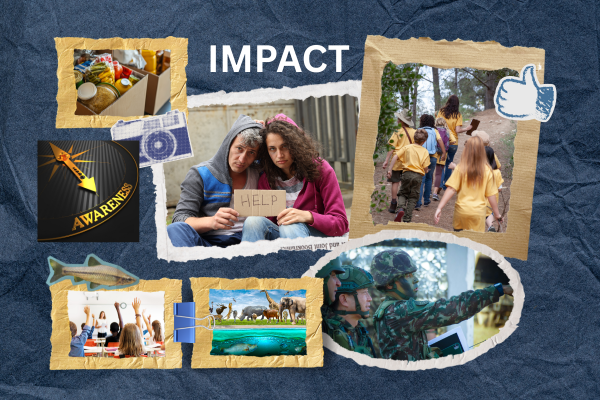
Grant development is a unique craft where the written word becomes the primary tool for driving positive change in our communities. It's more than just filling out forms; it’s about taking a good idea—a project to support students, seniors, or vulnerable families—and translating its actual need and potential impact into a compelling narrative. When successful, those carefully written words secure the funding that breathes life into essential programs, directly supporting and uplifting the people who need it most. We see ourselves as advocates, using language to bridge the gap between resources and those dedicated to making a real difference.
Watch our most recent award video here!
Q&A Corner - Get Your Frequently Asked Questions Answered
Q: What is a "Match" or "Cost Share" requirement?
A: This is a requirement where the applicant must provide a portion of the project’s cost. For example, a 50% match on a $100,000 project means the grantor gives you $50,000, and you must provide the other $50,000 through cash or "in-kind" contributions (like volunteered time or donated equipment).
Q: What is the "Sustainability" question really asking?
A: Funders want to know: "If we give you this money now, will the project die the moment the grant ends?" They are looking for a plan—such as future fundraising, fee-for-service models, or institutional buy-in—that ensures their "investment" has a long-term impact.
That's all for this month, folks! Remember, we're stronger together. Keep engaging, keep learning, and keep growing.
Until next time, Team GCS signing off!
Responses